
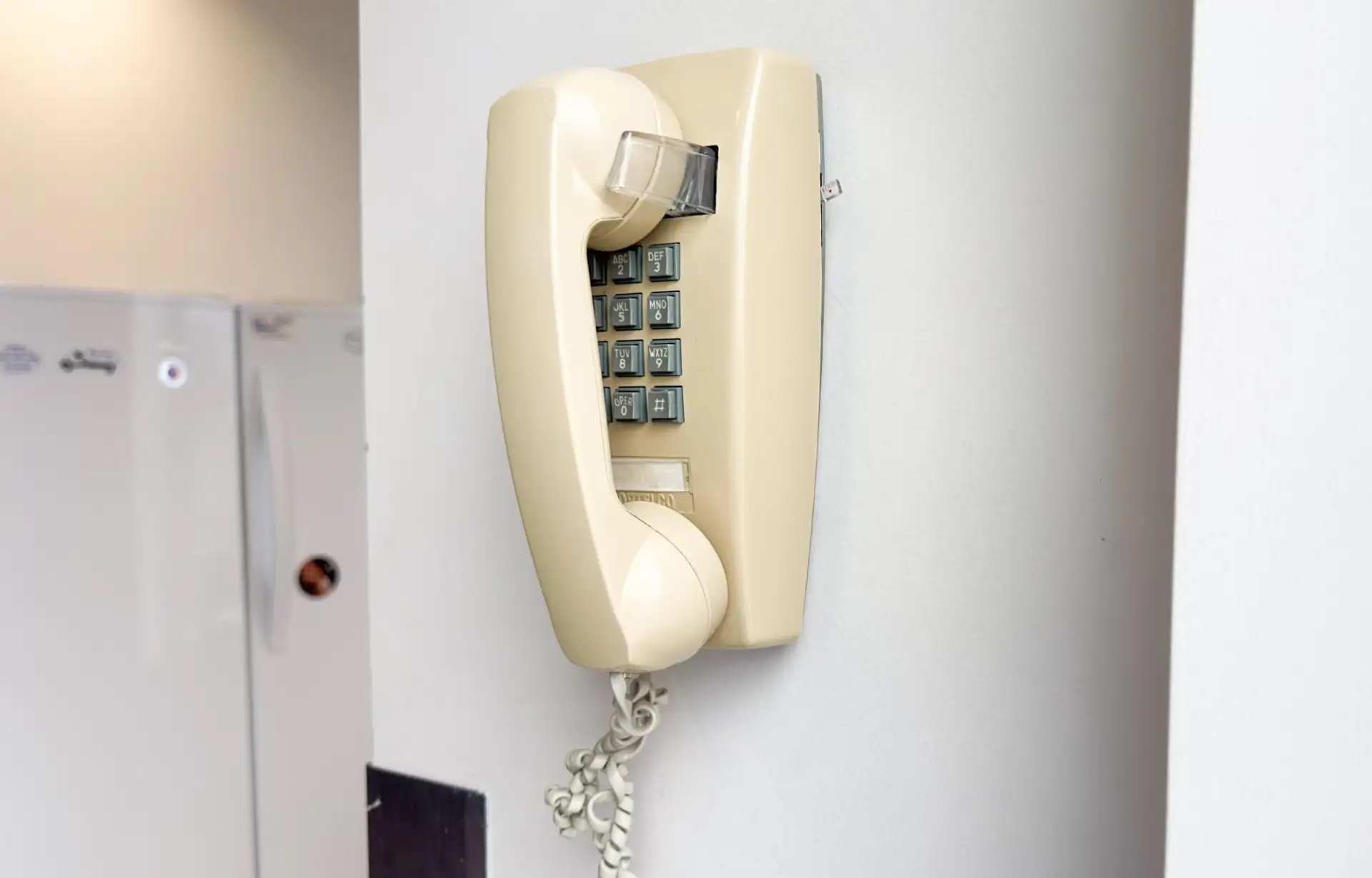
The prison phone system has three moving parts: a personal account with a PIN, credit that only the person in prison can spend, and a list of numbers they are allowed to ring. A call happens when all three line up. Almost every problem families run into is one of those three, not a fault on the line.
This is how each part works in England and Wales, and where the delays come from.
The PIN account
Everyone using the phones has their own account with a personal identification number. Nothing connects without it, and nothing connects without credit on the account. That credit is the person's own money, and it reaches the phone account by a two-step route that catches out almost every family at least once: money you send goes into their private cash account, and they then have to transfer it across to phone credit themselves. There is no way for you to top up the phone directly, so if they have not moved it, the phone will not work however much you have sent. Calls are then charged by the minute, at a rate that depends on the kind of number being rung — since April 2025, 5.5p a minute to a mobile and 2.48p to a landline on weekdays in England and Wales, on figures the Ministry of Justice released to Inside Time under a Freedom of Information request.
The practical upshot is that three separate things have to be true before a phone rings at your end, and only one of them is anything to do with the phone.
The approved contact list
The system will only connect calls to numbers on the person's own approved list. Everything else is refused.
Under PSI 49/2011, someone on a call-enabling regime is allowed up to 20 social numbers, plus up to 15 legal and confidential-access numbers — with scope for more legal numbers where someone is engaged in litigation, and a governor's discretion beyond that in exceptional cases. Policy also says a prisoner must not be charged for adding or deleting legal numbers from their account.
Two limits sit alongside the list and surprise people. Business numbers can be rung, but only for the purpose of speaking to family and friends. And prisoners cannot make commercial enquiries or order goods by phone, cannot reach an operator, and are not given access to directories — if they need a number they do not have, they have to apply and staff look it up for them.
How a number is submitted
Numbers are submitted by the person in prison, through the establishment's own process. There is no route for you to add yourself, and no form you can fill in from outside.
Depending on the regime, numbers may have to be approved before a call can be made to them. Where checks are carried out, the framework describes what they involve, and it is more human than most people expect: staff confirm the identity of the person they are speaking to, how that person knows the prisoner, and whether they are happy to be contacted by the prisoner on that number.
So if you get an unexpected call from the prison asking who you are and whether you are content to be rung, that is the check — not a problem.
Checking is mandatory only for particular groups: category A prisoners, people held for terrorism offences, those identified as posing a risk to children, harassment or stalking cases and those under court-imposed orders, domestic abuse cases, Schedule 3 sexual offences, witness-intimidation risks, and prisoners on the escape list. For everyone else, the framework says checking "is not mandatory and can therefore be considered and managed locally". That single sentence explains why the experience differs so completely between two prisons.
The number you submit decides which rate the prison charges for every call.
How long it takes, and why
Policy sets no deadline, which is the honest answer. What it does set is an instruction against unnecessary delay.
Where a prisoner has submitted a list of numbers, staff are told that each number "should be added to the account once checked, rather than waiting for every number on the list to be checked", and that prisoners should be notified of each addition as soon as is practical. For new arrivals, GOV.UK says the list is checked by security when they first arrive, so it may take a few days before they are able to call.
If a number has been sitting unused for a fortnight, the useful thing for the person in prison to ask is not whether they are blocked but whether that specific number has been checked and added — those get different answers.
Some numbers are refused rather than delayed, and the reasons policy gives include intelligence suggesting an attempt to get around existing restrictions, a suspicion that the number belongs to another prisoner, or the contact being a victim. Policy also directs prisons to restrict requests to add 0800 numbers and numbers linked to call diversion and re-routing services — a category that includes forwarding services like ours, which we would rather say plainly than let anyone find out the hard way. Why a prison blocks or refuses a number goes through the grounds, the notification the prisoner and the contact are entitled to, and the three-month expiry on a restriction.
Legal calls work differently
Calls to a legal adviser, and to organisations on the confidential access list, sit on a separate side of the system: they are not recorded, and they are not counted against the social numbers. Everything else on the account is recorded as a matter of course, and what recording actually means, as against being listened to, is a distinction worth having straight.
Two details matter and both get missed. The exclusion is not automatic — PSI 49/2011 places the onus on the prisoner to tell staff that they wish to make a legal call, so a solicitor's number dialled without doing that goes through the ordinary recorded route. And adding or removing a legal number is free: policy states a prisoner must not be charged for adding to or deleting legal numbers from their account.
If someone is dealing with an appeal, a family court matter or an immigration case, it is worth them checking how their establishment wants those calls set up rather than assuming it happens by itself.
A genuine 01 or 02 landline is charged at the lower rate; a mobile is not.
When they can actually use it
Access is governed by the regime rather than a national timetable. Prisoners must be given access during association and at other reasonably practicable times, and the time available "must not normally be less than two hours each day". Phones can be scheduled to come on and off around the prison's working day, with different schedules on different days, and those schedules are set centrally within each establishment.
And in one direction only: the PIN phone system does not accept incoming calls at all. Any arrangement for an incoming call has to involve an official telephone, which means going through staff in genuinely urgent circumstances.
What happens on a transfer
The account and the list travel with the person, but the regime does not. A move can change the hours the phones are available, whether there is a phone in the cell, and how quickly anything gets dealt with. Numbers already approved do not normally need resubmitting, though a new establishment may take its own view where restrictions are involved. The hours are the part people notice first, and phone access times differ from prison to prison because each establishment sets its own schedule.
Frequently asked questions
The questions families ask most about how the system works.
How many numbers can a prisoner have?
Up to 20 social numbers, plus up to 15 legal and confidential-access numbers, with more allowed for legal numbers in some circumstances.
Can I add my number myself?
No. Only the person in prison can submit a number, through the prison's process.
Will the prison ring me to check?
They may. Where checks are carried out, staff confirm who you are, how you know the prisoner, and whether you are happy to be called on that number.
Why can I not call them?
The prison phone system does not accept incoming calls. Contact has to start from their side.
Most of what feels arbitrary about prison phones turns out to be one of three things — no credit, no approved number, or no access period. Knowing which one you are dealing with is usually enough to fix it.
If the calls you get are being cut short by cost rather than by the clock, how a landline number changes the rate explains the mechanism, and the questions families ask first covers what it does not change.
If you want to see what a landline number costs, the plans are here.